A Contemporary Wellness Retreat Centred on Food and Knowledge
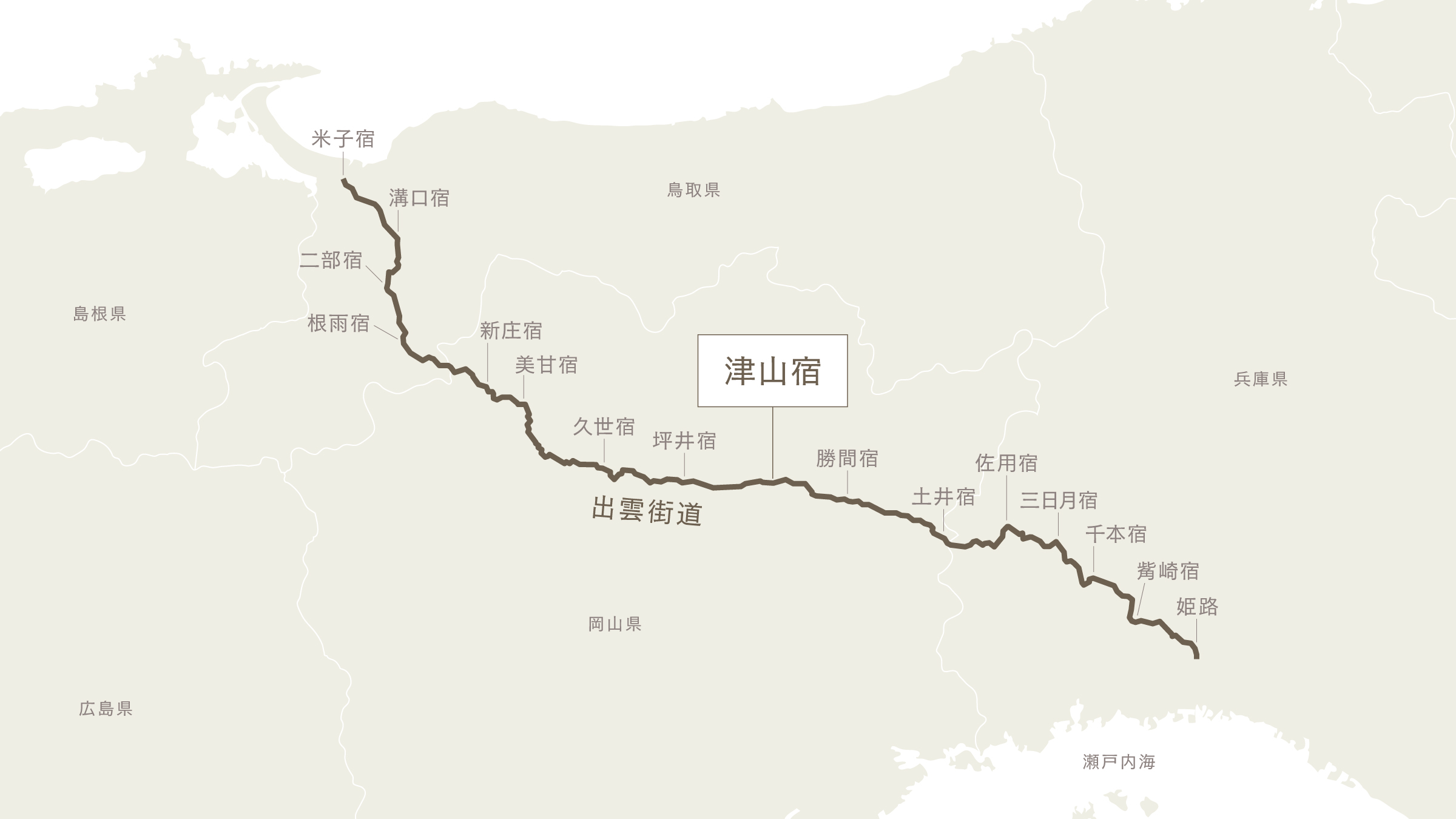
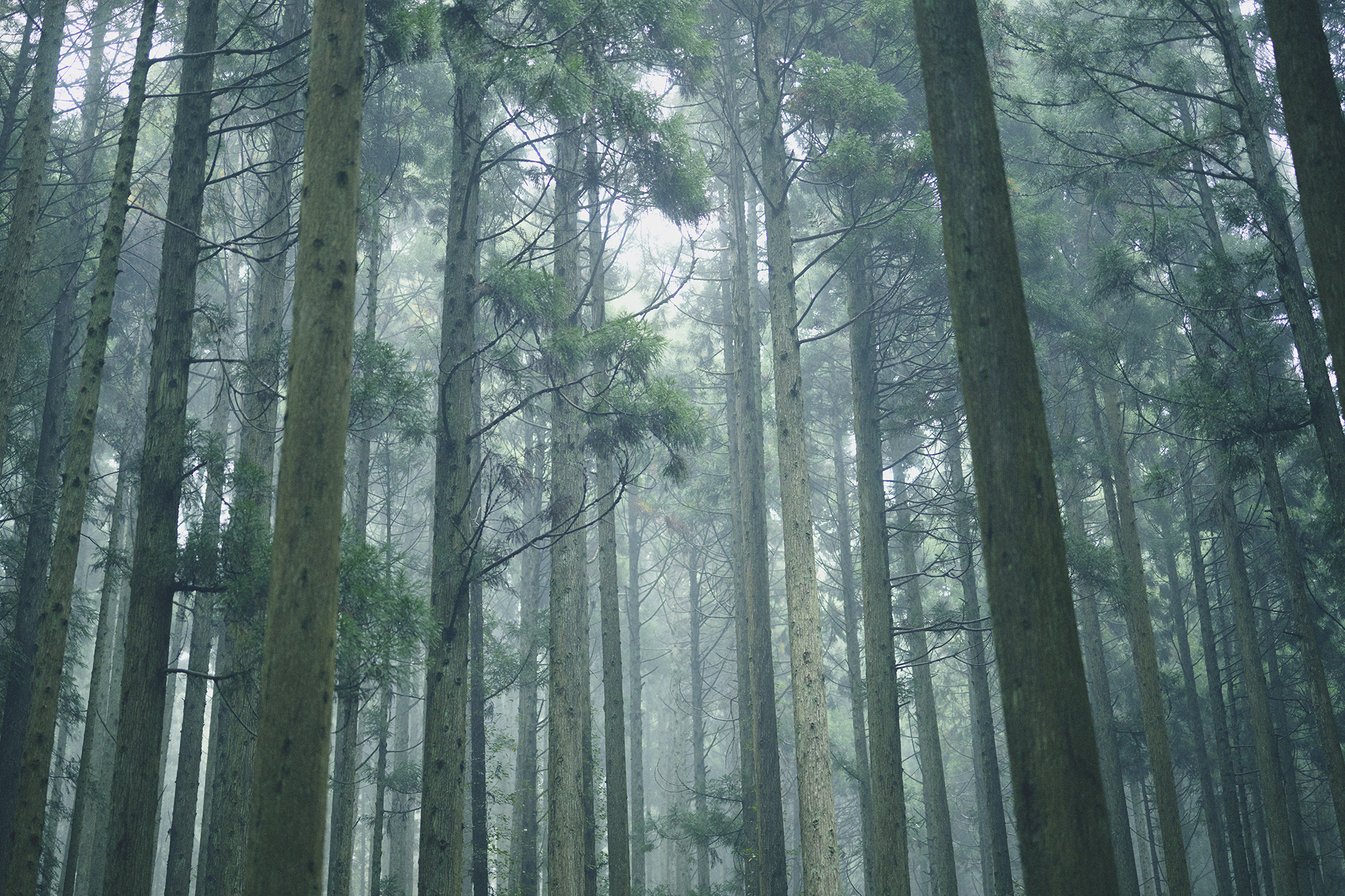
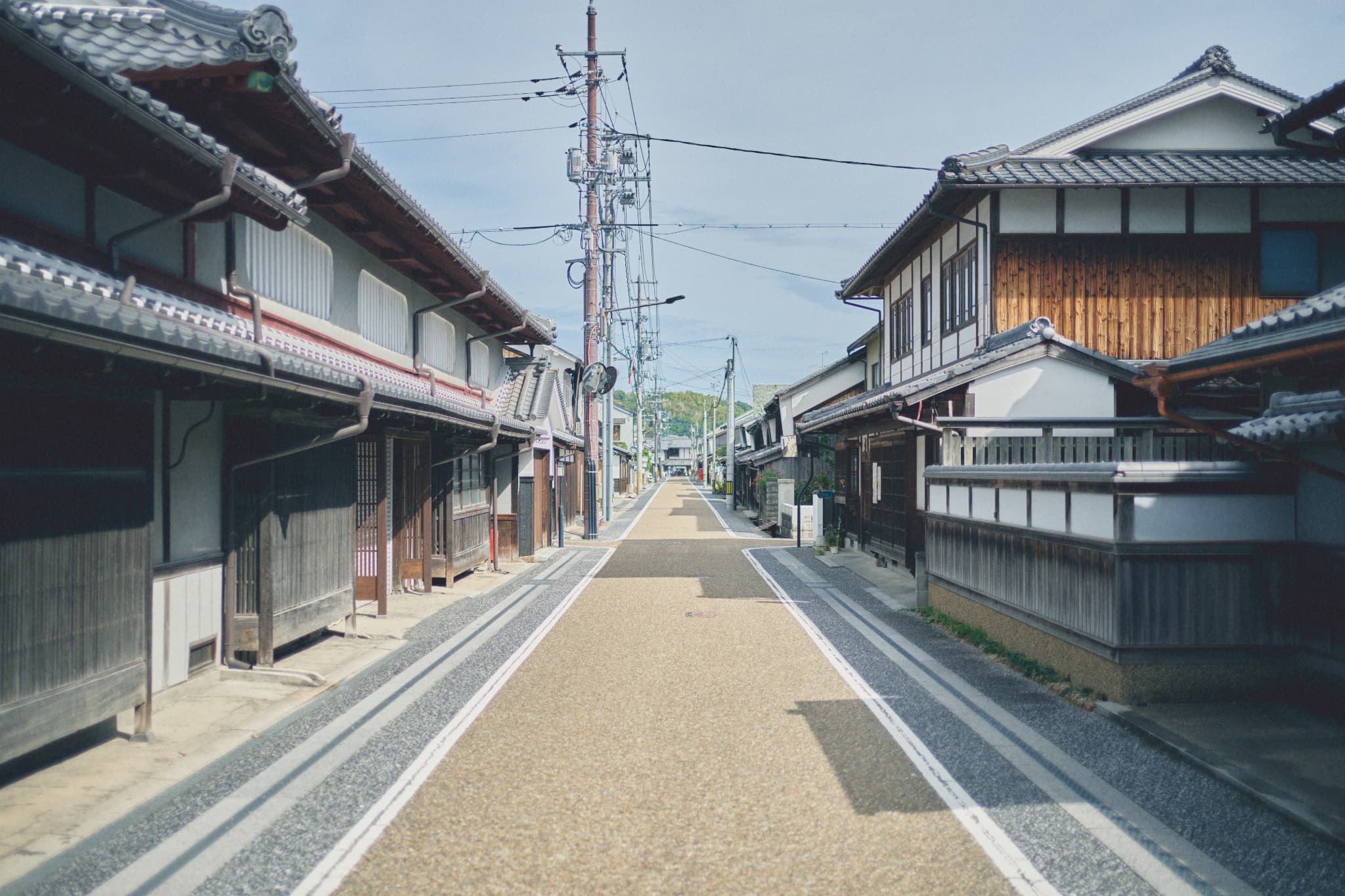
Tsuyama, which flourished as a key hub on the Izumo Kaidō, boasts a history of embracing new knowledge through Western studies, as well as a culture of beef consumption that dates back to before the Meiji era. From the two Important Preservation Districts for Groups of Traditional Buildings—Jōtō and Jōsei—to various other locations throughout the town, merchant houses and temples still stand, allowing visitors to experience the aesthetic sensibilities of each era, ranging from Edo-period merchant houses to Western-style buildings from the Taishō era.
Cultural heritage sites dotted throughout the town. Staying amongst the town’s treasures
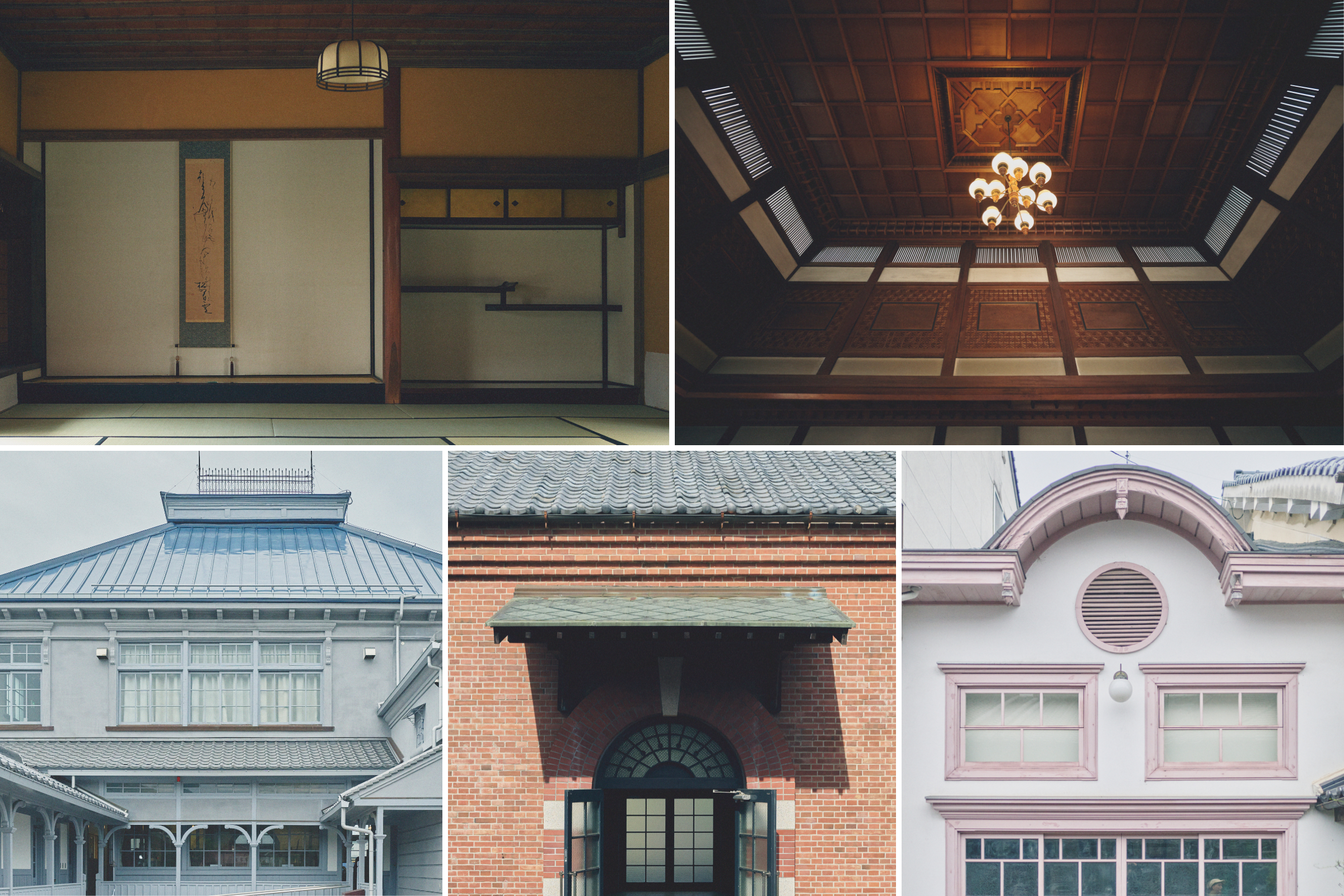
In conjunction with the ‘Tsuyama Town-wide Museum Concept’, which views the entire town as an ‘open-air museum’, we propose a journey where you can trace the knowledge, cuisine and way of life that thrive in the town whilst staying in historic buildings. The cultural heritage that Tsuyama has carefully preserved will serve as the backdrop to your stay.
Stay, dine, read a book, and trace the history. With exhibitions, cafés and spaces open to the public, these venues will continue to serve as places where both travellers and local residents can engage with the town’s treasures and discover its charm.
[Tsuruyama-kan] Tracing History at a School Within the Castle Precincts
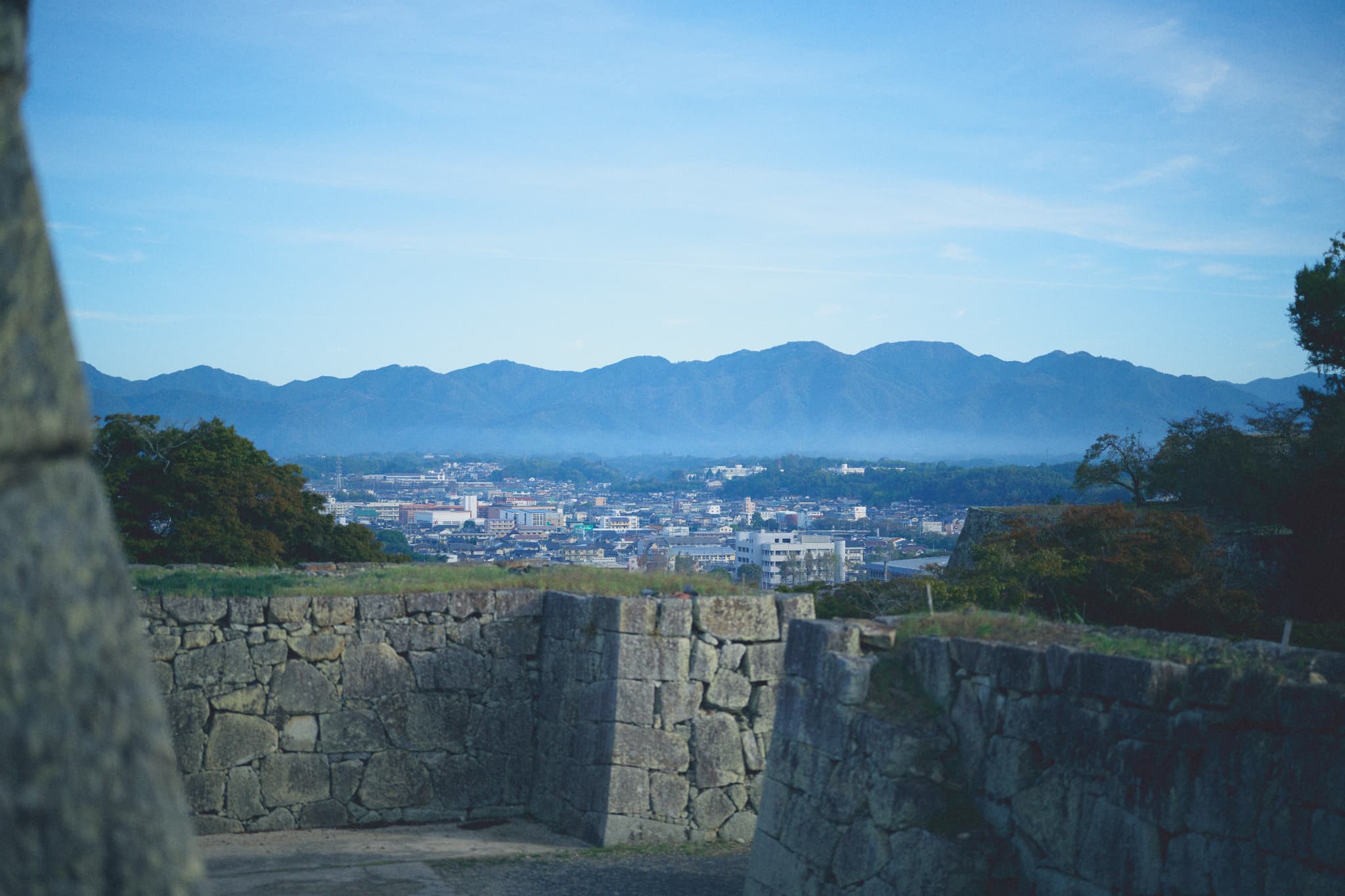
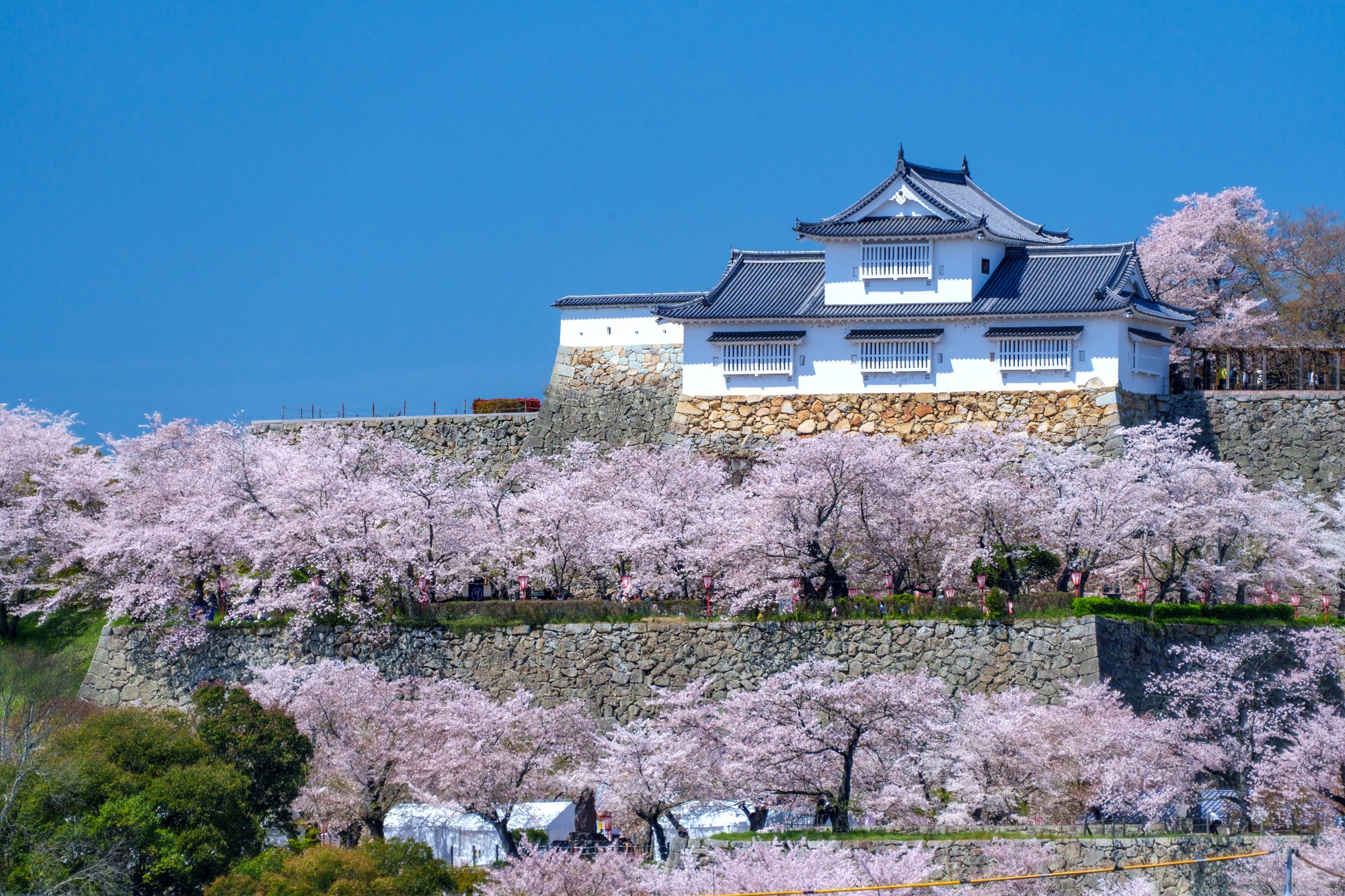
The view from the ruins of Tsuyama Castle, overlooking the stone walls dating back to the Edo period, as well as the townscape and mountain ranges of Tsuyama
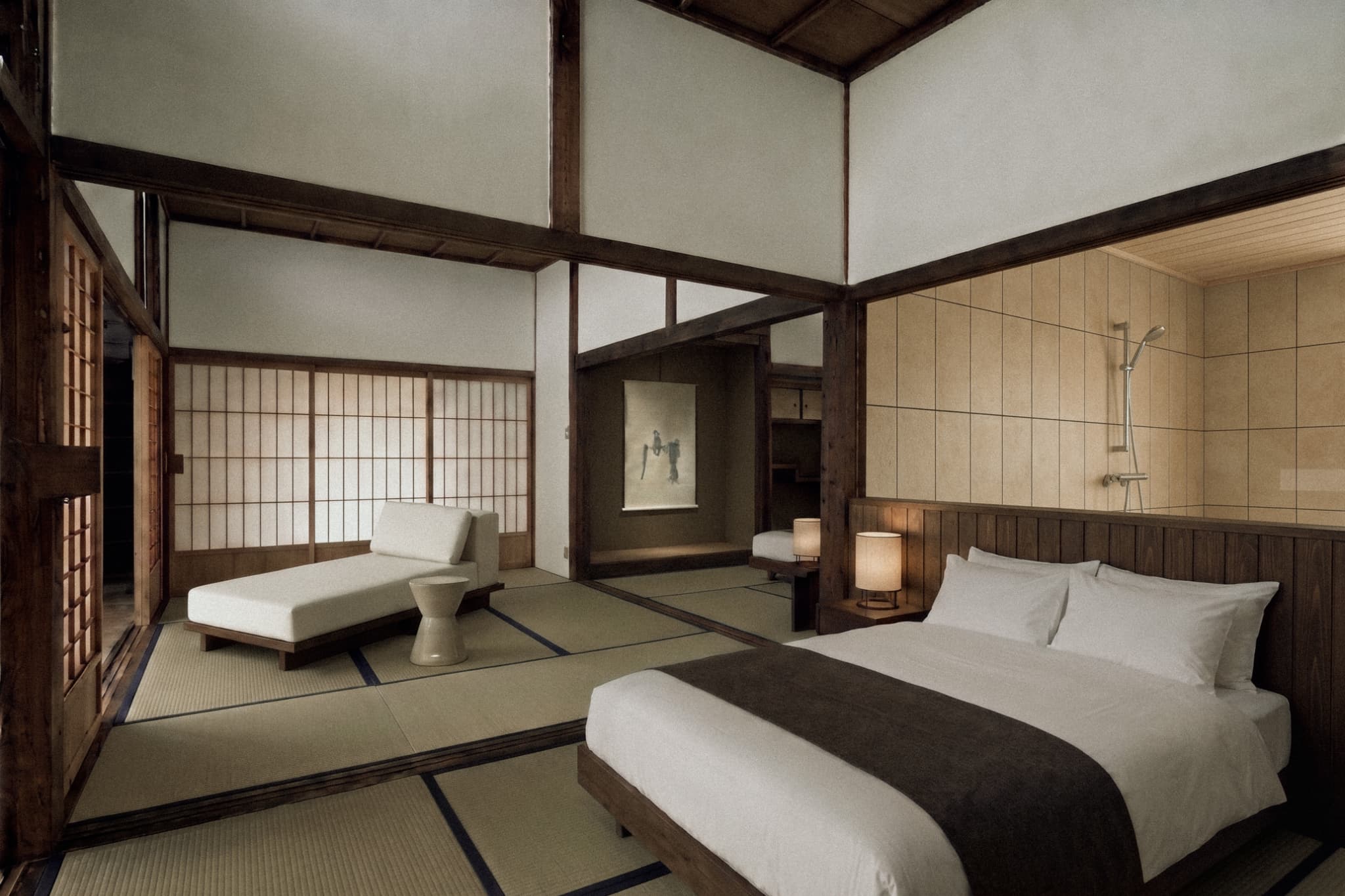
Tsuruyama-kan, Room 1: Conceptual image
Tsuruyama-kan stands within the castle grounds of Tsuyama Castle Ruins and Tsuruyama Park. Originally built as a Confucian academy for the Tsuyama Domain and relocated during the Meiji period, the building now houses guest rooms available to just one group per day.
Surrounded by stone walls dating back to the Edo period, as well as cherry blossoms, fresh greenery and autumn foliage, this stay allows you to experience the castle ruins up close in a way that is not possible during daytime visits.
[Shurakuen] Spend the night in a scenic garden and wake up to the bounty of Mimasaka
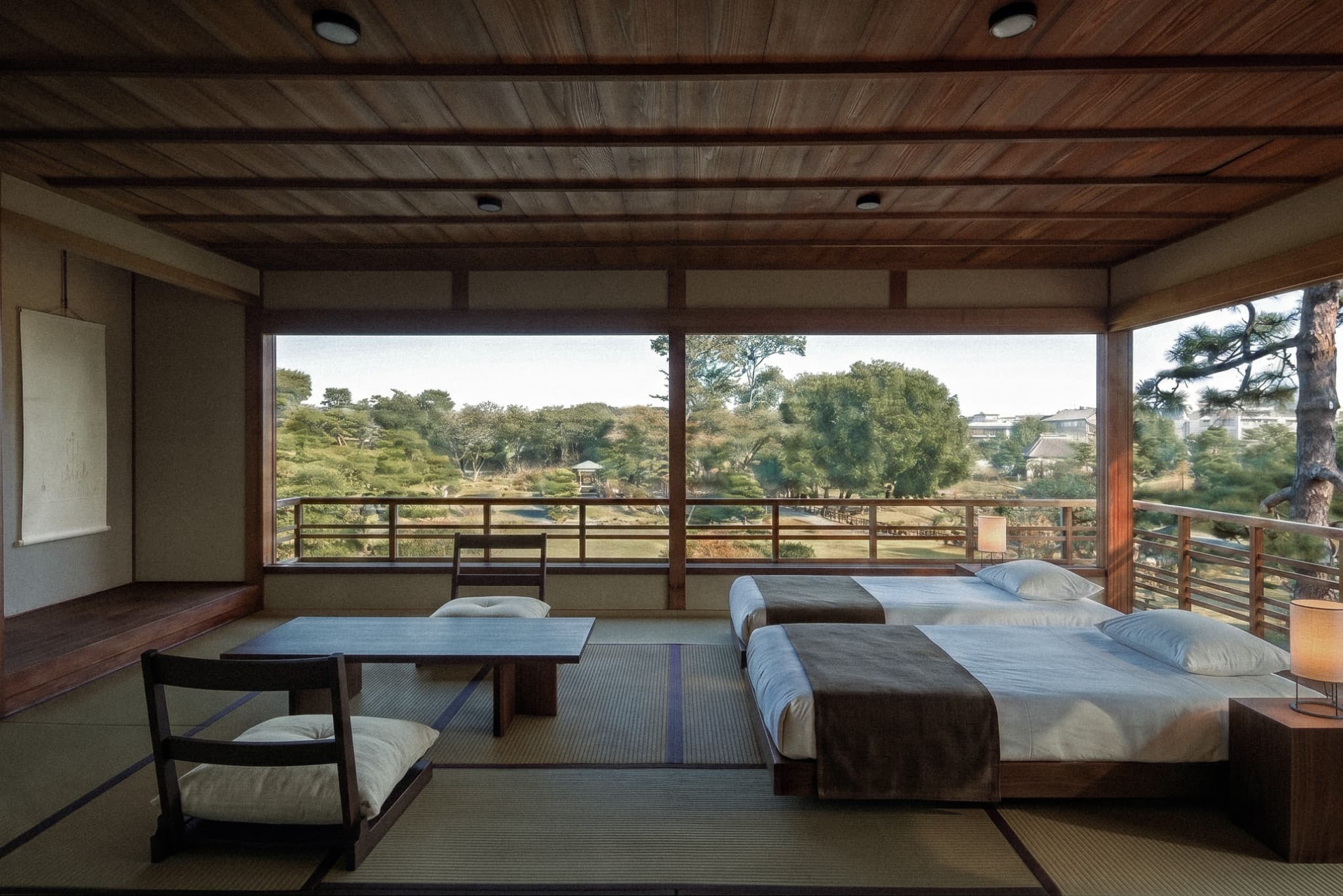
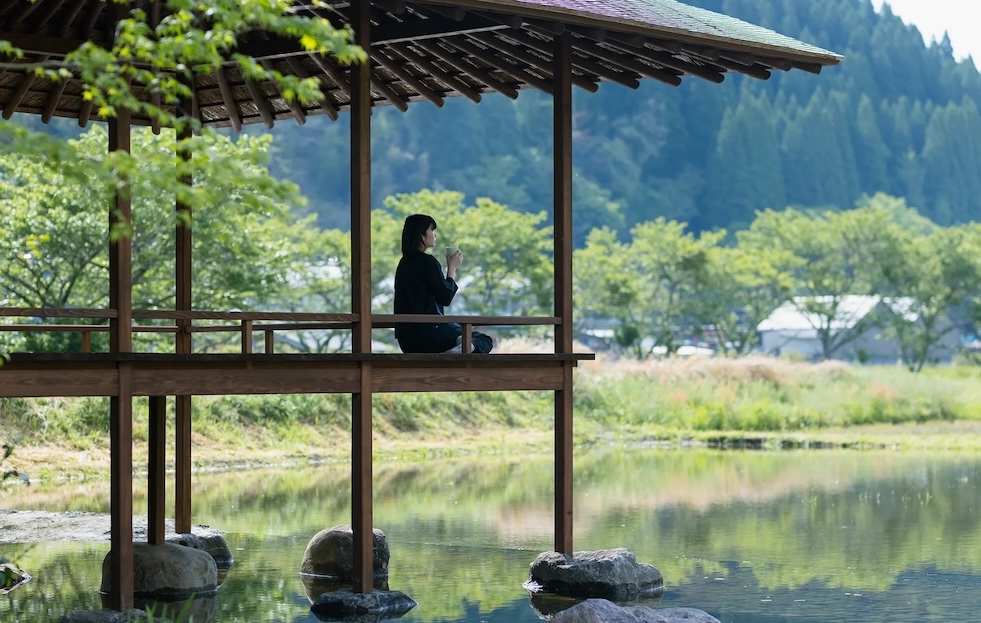
Designated a National Scenic Spot, the ‘Former Tsuyama Domain Villa Garden (Shurakuen)’ was created during the Edo period as the villa garden of the lord of the Tsuyama Domain. Spanning approximately 130 metres from east to west and 300 metres from north to south, it weaves together the scenery of the four seasons through its pond—adorned with islands and framed by the surrounding mountains—and the garden paths that wind around it.
The Yohōkaku, with its thatched roof, offers a guest room available to only one party per day. From here, guests can enjoy views of the pond, the sky and trees reflected on the water’s surface, and the ever-changing seasonal expressions of the garden.
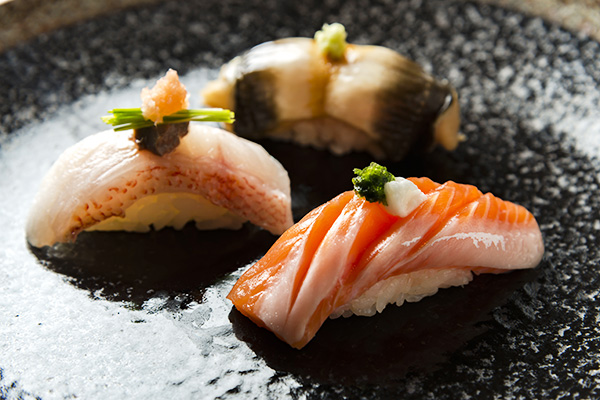
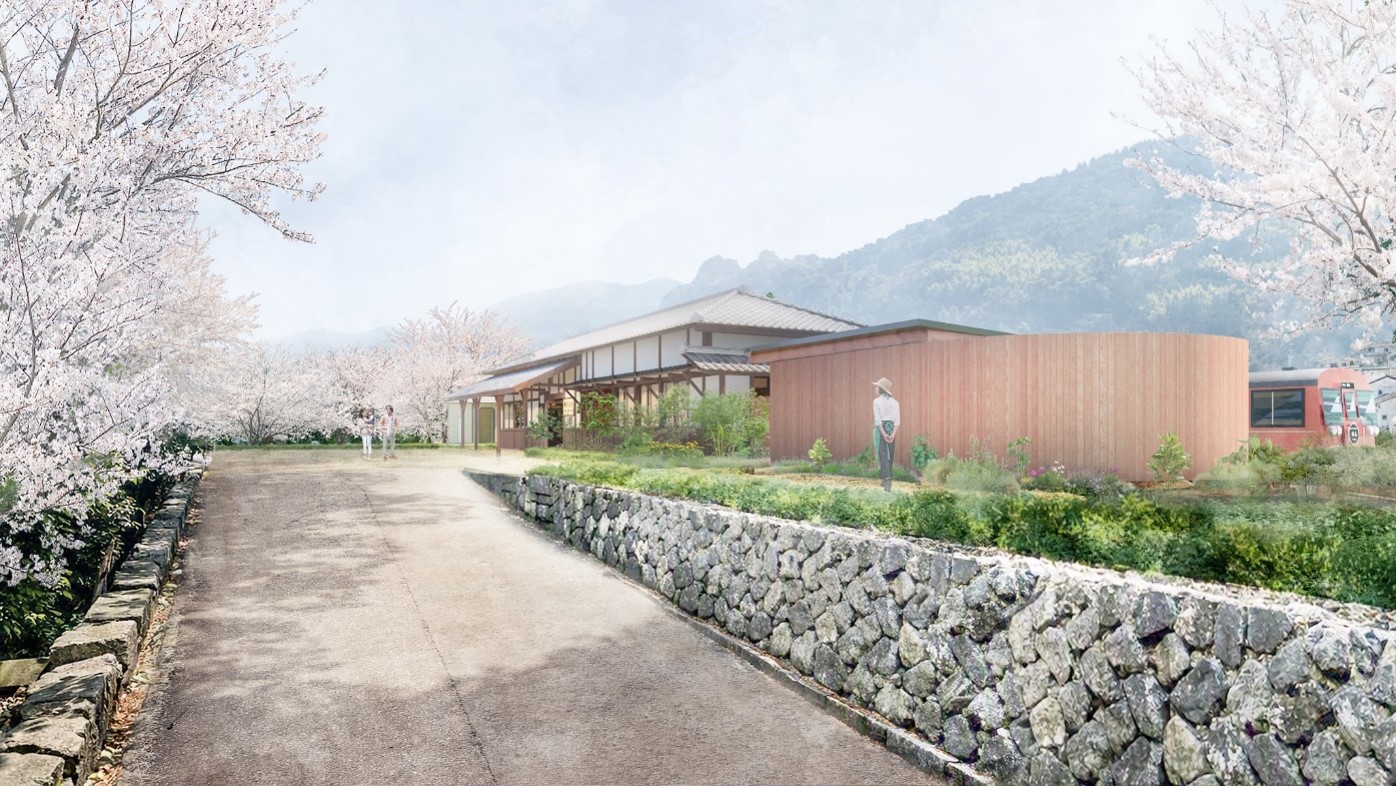
The guest house features a reception and a restaurant. In the morning, guests can enjoy a breakfast incorporating Mimasaka rice, wheat and seasonal fruits whilst gazing out over the garden. After breakfast, guests can enjoy a stroll along the banks of the pond.
[Former Kajimura Family Residence and Former Ikegami Family Residence] Discover the history of daily life and architecture in a castle town situated along the Izumo Kaidō
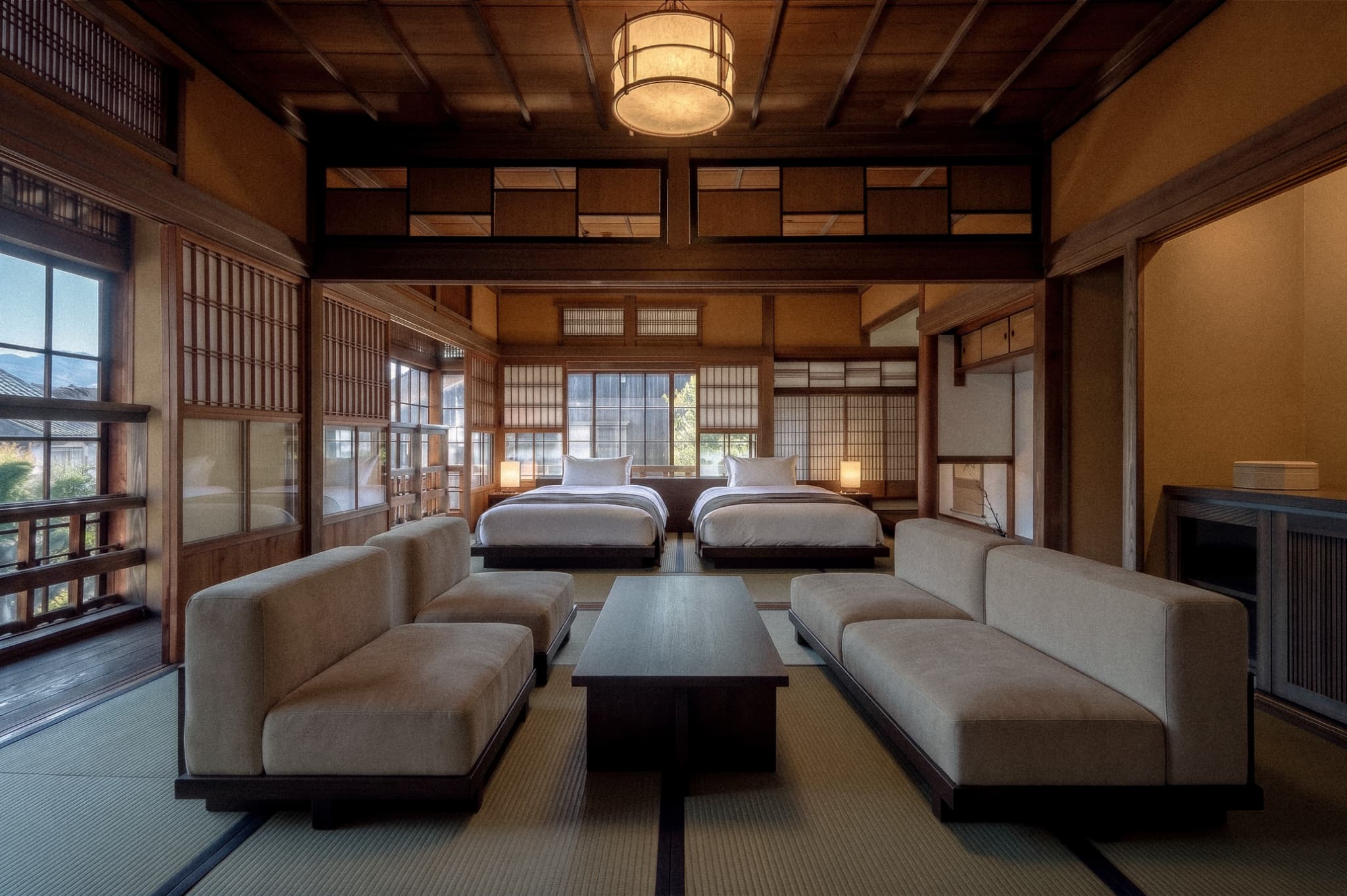
Former Kajimura Family Residence, Room 3 – Illustrative image
A merchant’s house, designated as a Nationally Registered Tangible Cultural Property, situated within the Joto Important Traditional Building Group Preservation District. The main house, dating from the late Edo period, is complemented by a Western-style building from the Taishō era and a rear formal sitting room, allowing the aesthetic sensibilities of each era to come to life within a single compound. Making the most of Western design elements—such as latticework and transom windows—that blend seamlessly into the traditional Japanese space, the property features four guest rooms, each differing in size, layout and ambience.
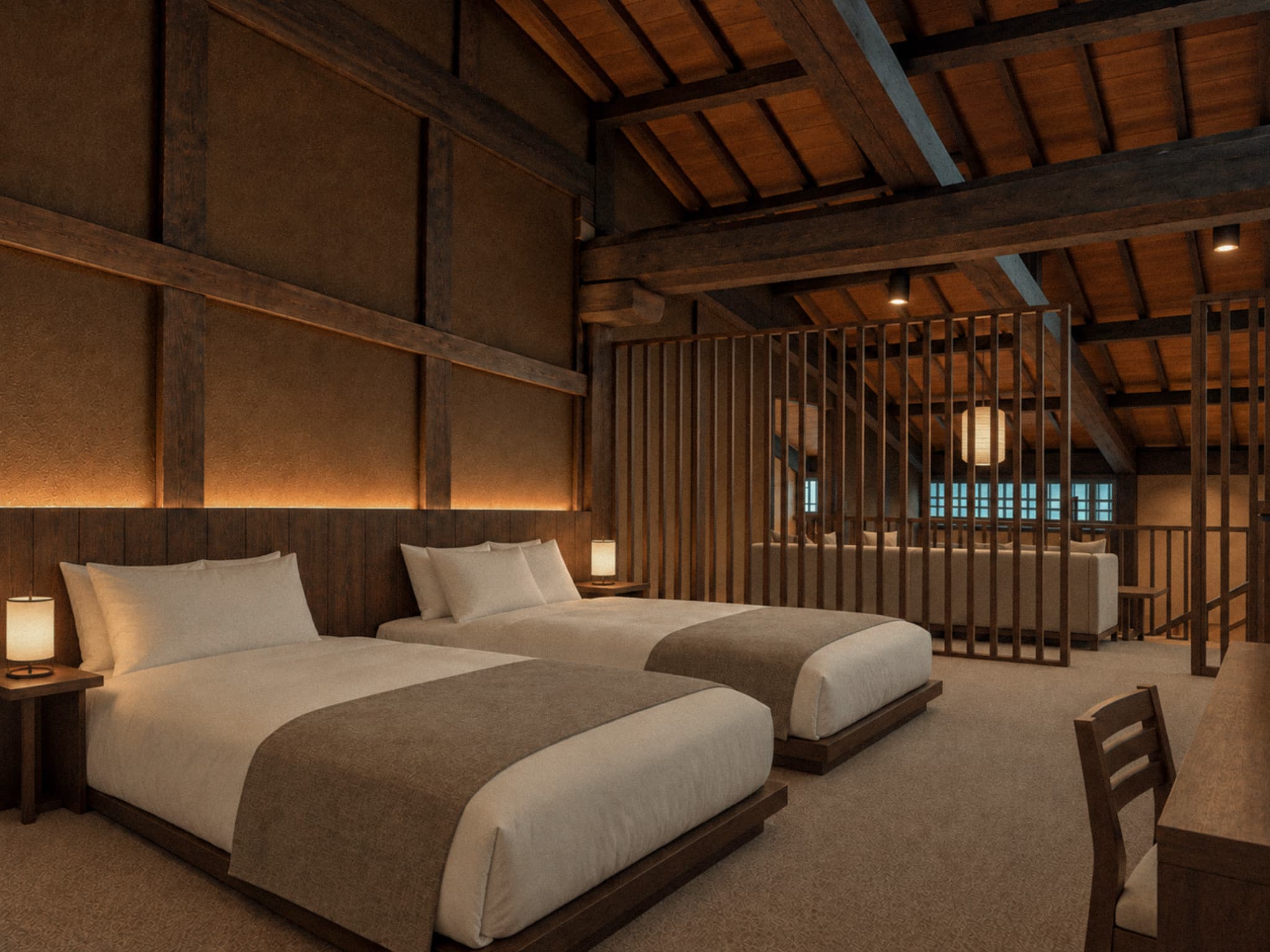
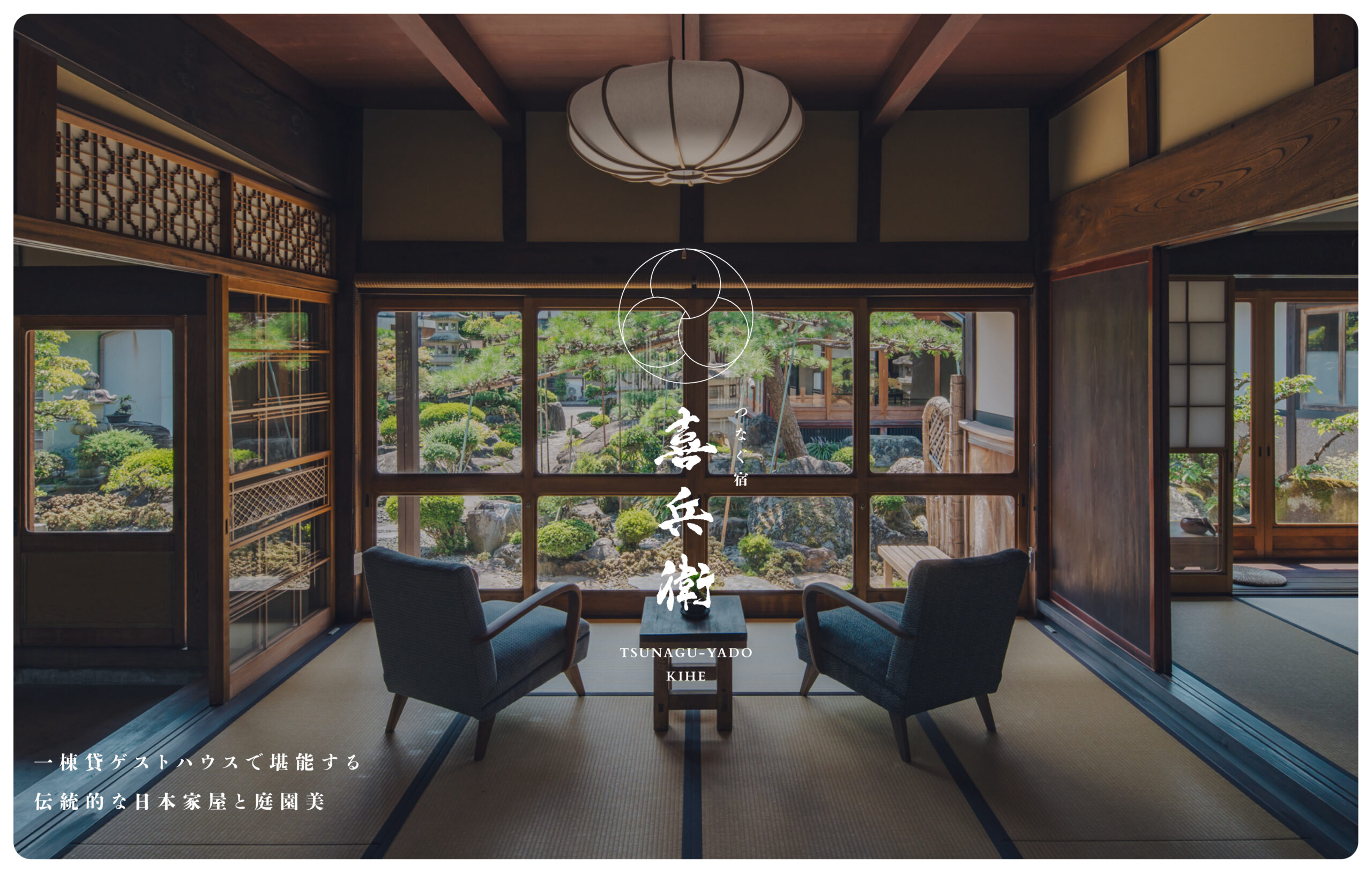
Former Ikegami Family Residence, Room 7: Conceptual image
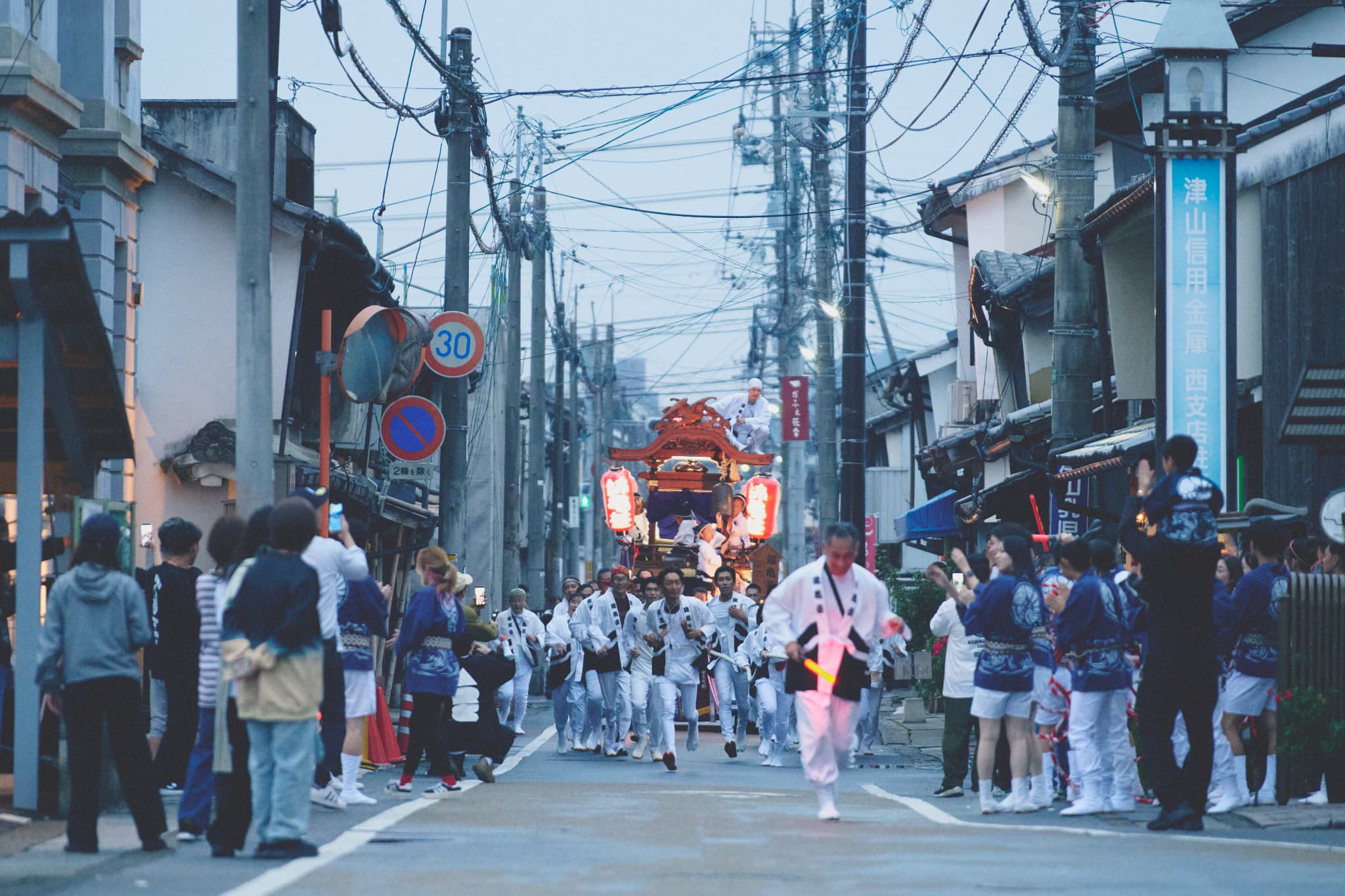
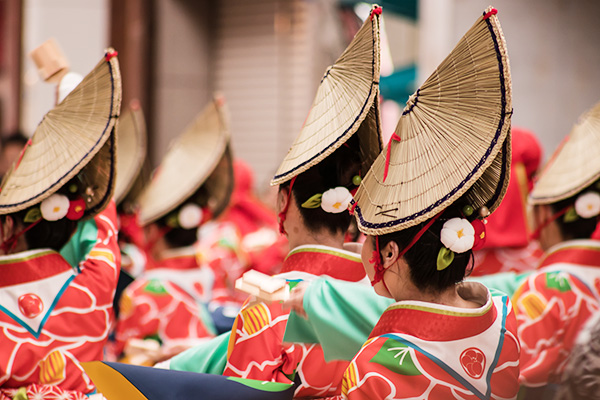
Scenes from the Tsuyama Festival
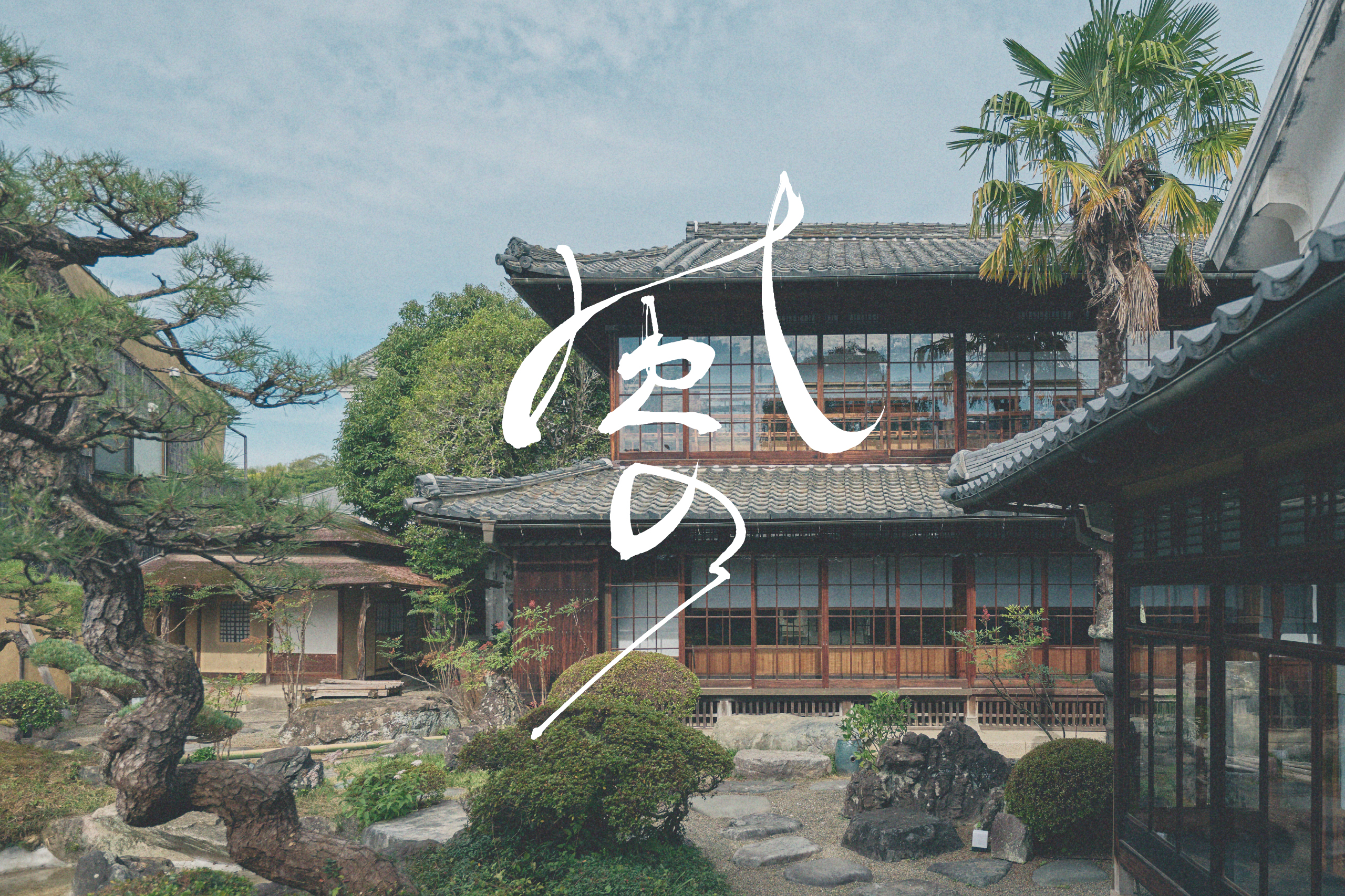
Make this historic mansion with its garden, situated in the Josai District—a designated area for the preservation of important traditional building groups—your base during your stay. During the festival, the danjiri floats pass right in front of the mansion, allowing you to experience first-hand the festival traditions that have been passed down through the town.
Kaze no Tsuyama – Facility Overview