“TeamLab Borderless” Spring scenery such as cherry blossom lamps and 100,000 giant rape blossoms has appeared.
2021.03.09
From March, spring scenery that can only be seen this season will appear. TeamLab Borderless is a “museum without a map” where you can experience works that change with the seasons as the world without boundaries changes throughout the year. In March-April, the “Resonating Lamp Forest-One Stroke, Cherry Blossoms” where the lamps shine in cherry blossoms, and the “Infinite Proliferating Life-A Whole” where 100,000 rape blossoms and peony bloom and scatter all at once. You can enjoy the spring-only work space such as “Year per Year”.
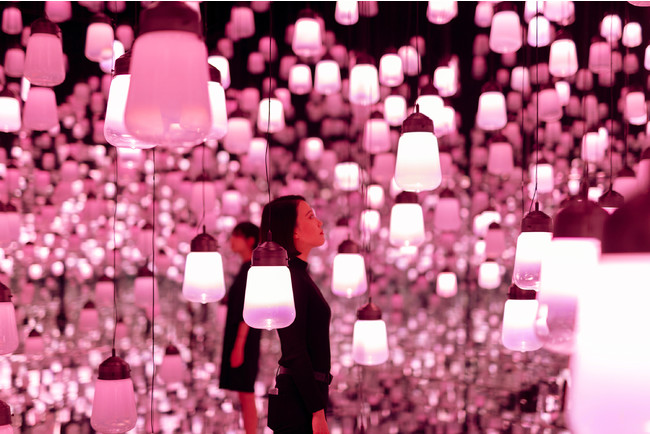
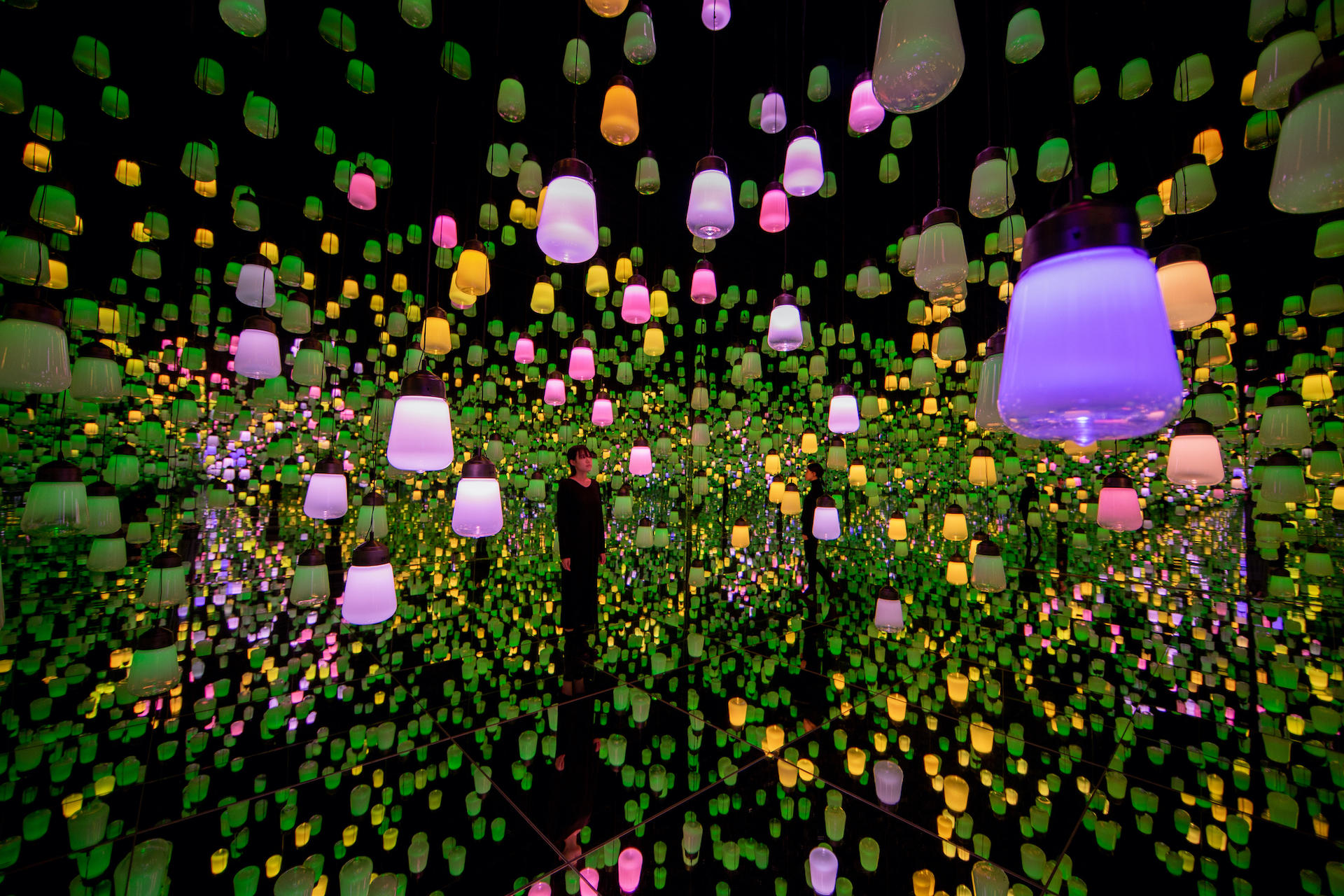
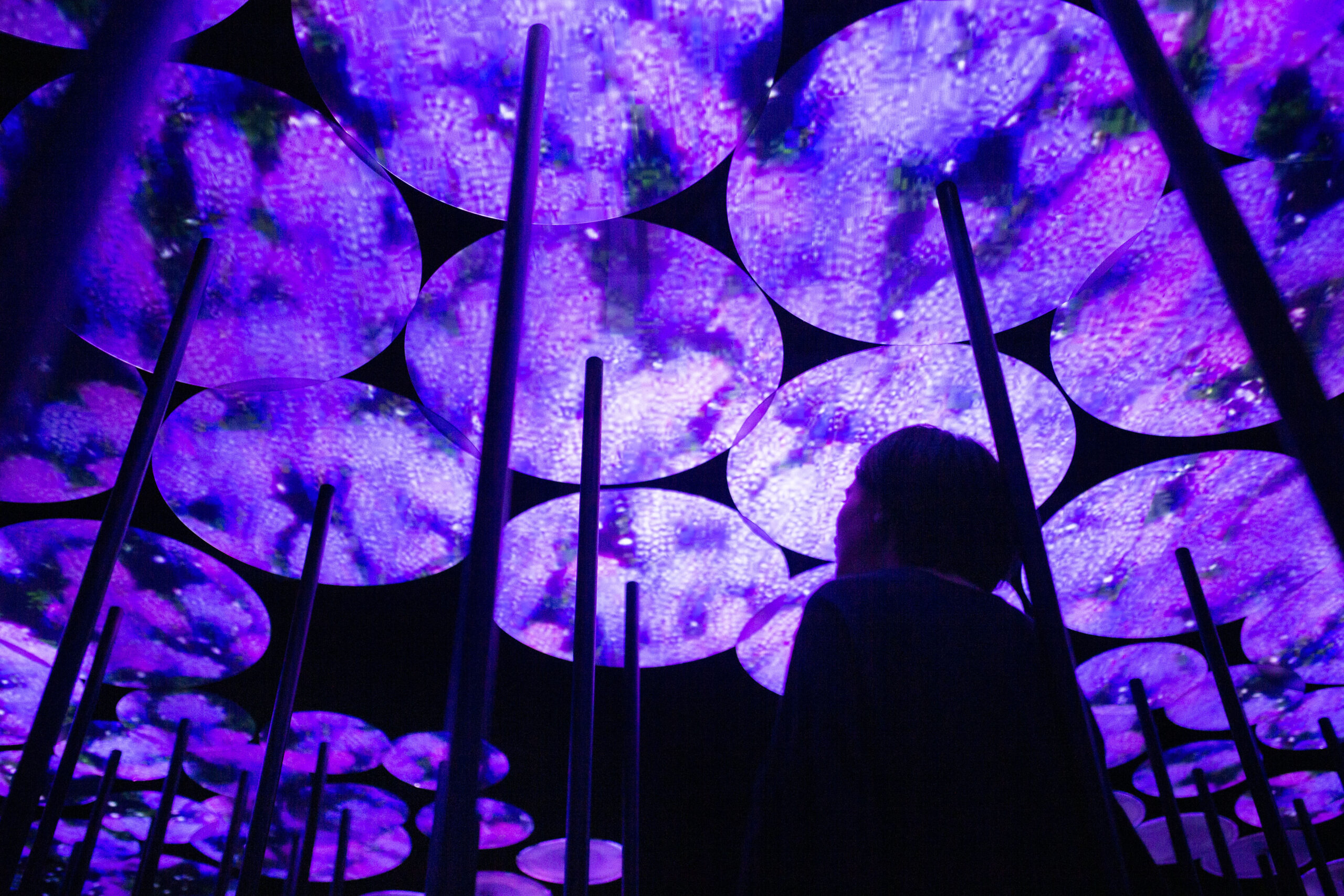
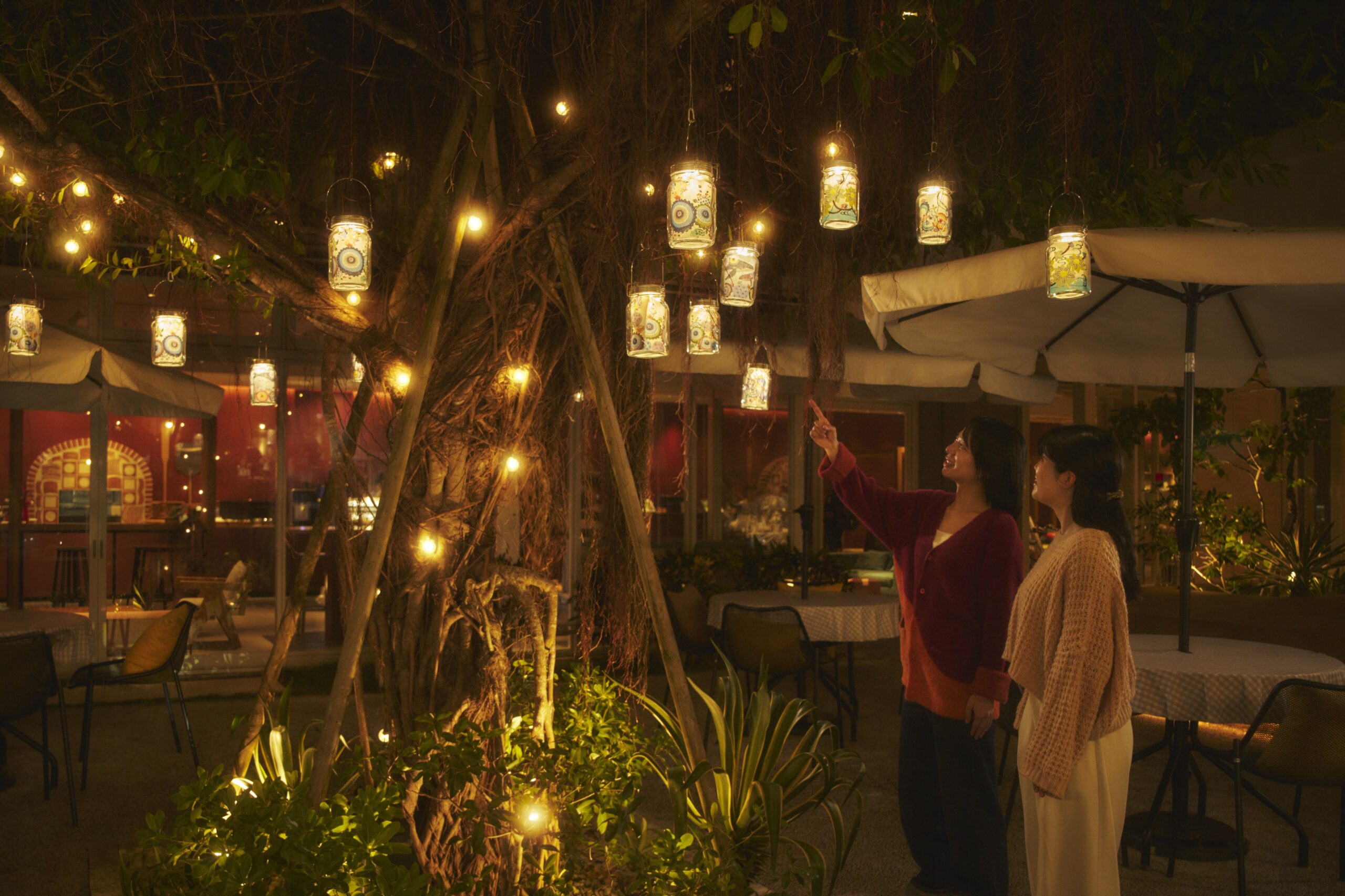
In the “Forest of Resonating Lamps”, from March to April, the lamps shine in cherry blossoms, “Forest of Resonating Lamps-One Stroke, Cherry Blossoms”, and 5 of Yamabuki, Urayamabuki, Aoyamabuki, Hanayamabuki, and Momo. Introducing “Forest of Resonating Lamps-One Stroke, Spring Noyama” where the lamps shine in color.
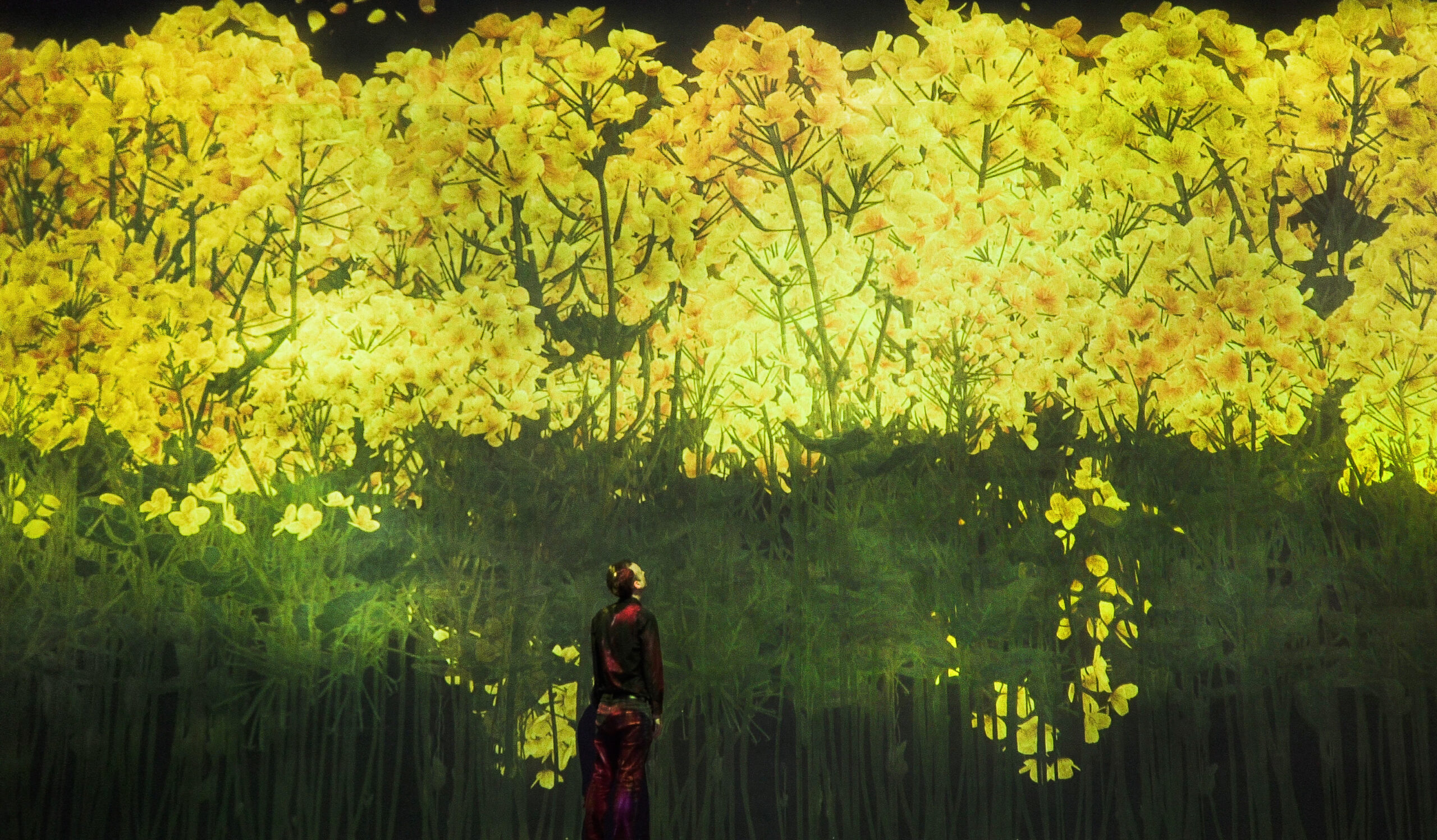
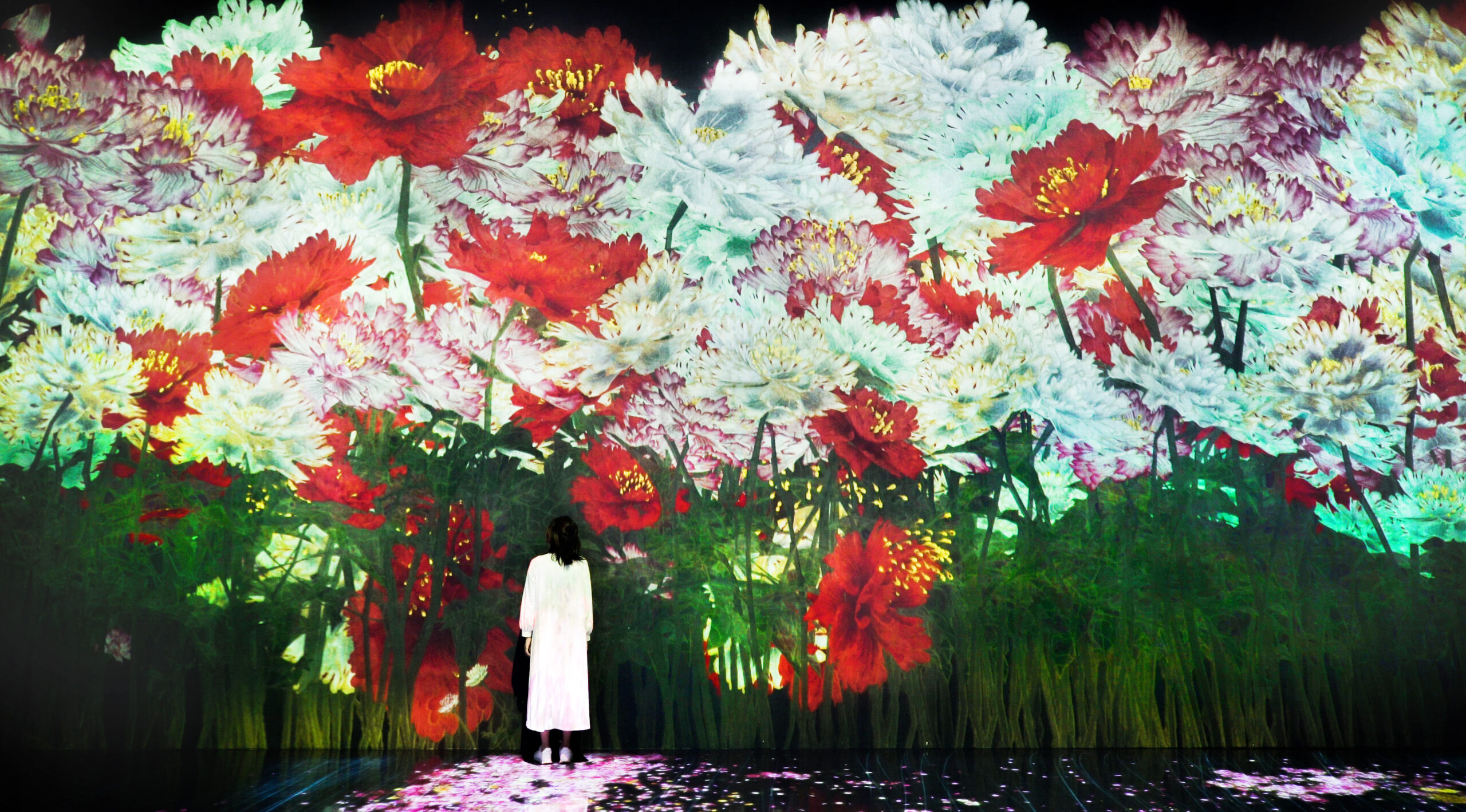
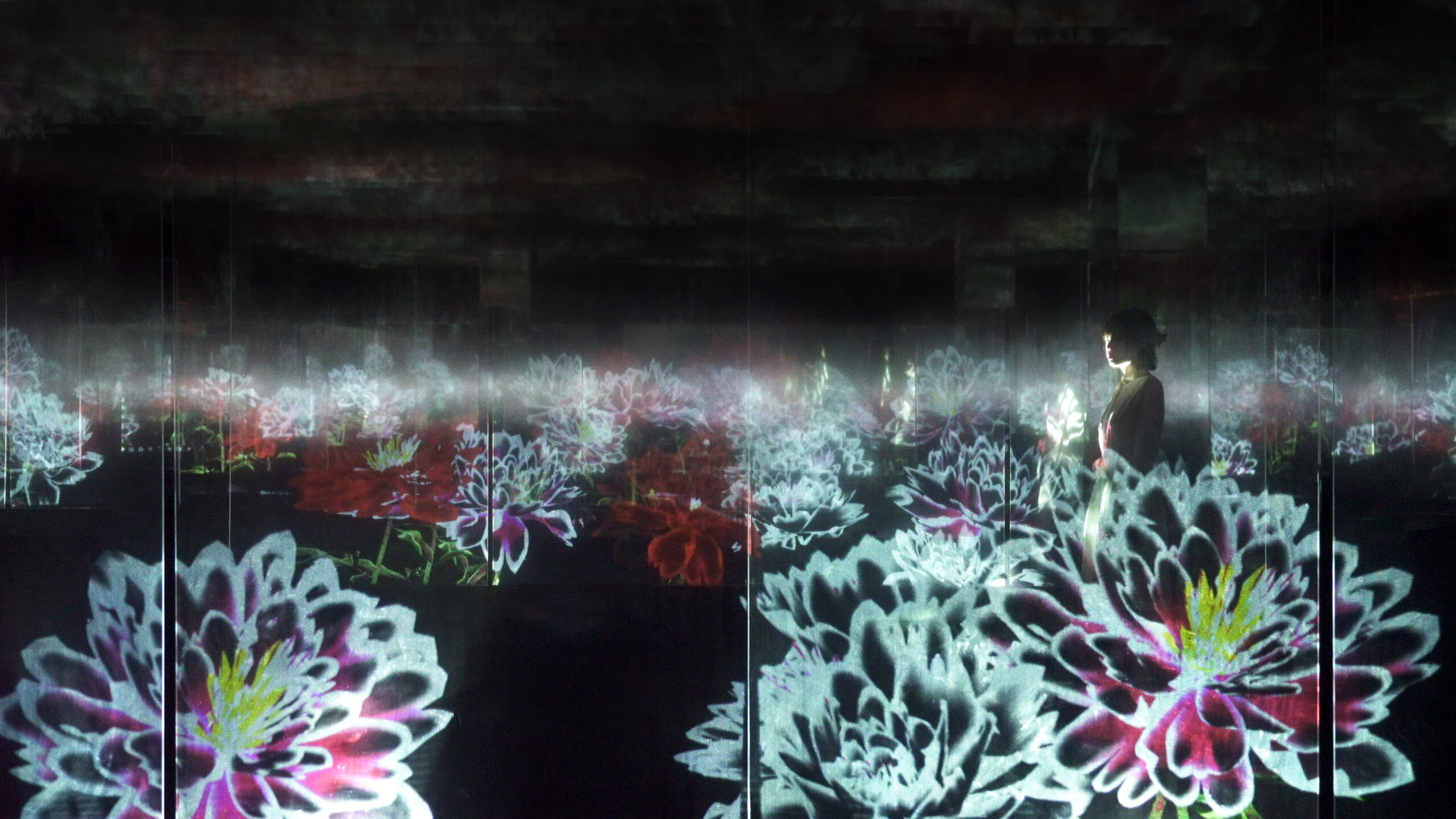
Rape blossoms (March-April) and peony (April) will appear in the huge flower “A Whole Year per Year” that grows up to 100,000 and decays all at once. When a visitor touches it, it bends and decays from the flower side, and new flowers are born again. When 100,000 flowers are scattered all at once, it is the most gorgeous and beautiful moment when the whole surface is covered with scattered petals and decays.
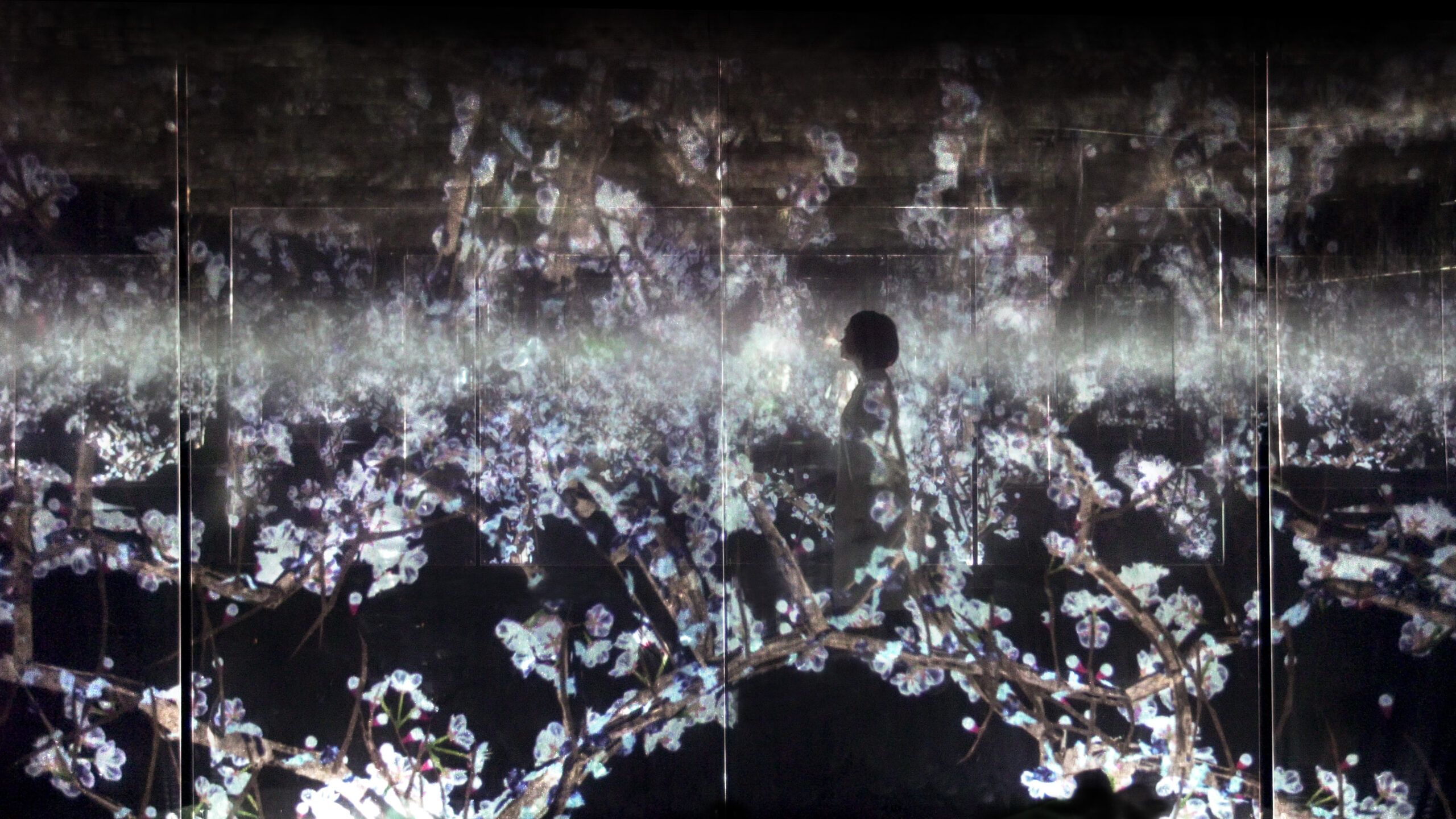
The work “Memory of Topography”, which depicts the scenery of the eternal satoyama, changes the scenery according to the four seasons of Japan, and during the period from March to April, in addition to spring flowers such as cherry blossoms, rape blossoms, and lavender. , Rice terraces, wisteria trellis, rivers and crucian carps in spring. As people move around in the work, the movements of rivers, crucian carps, and petals change.
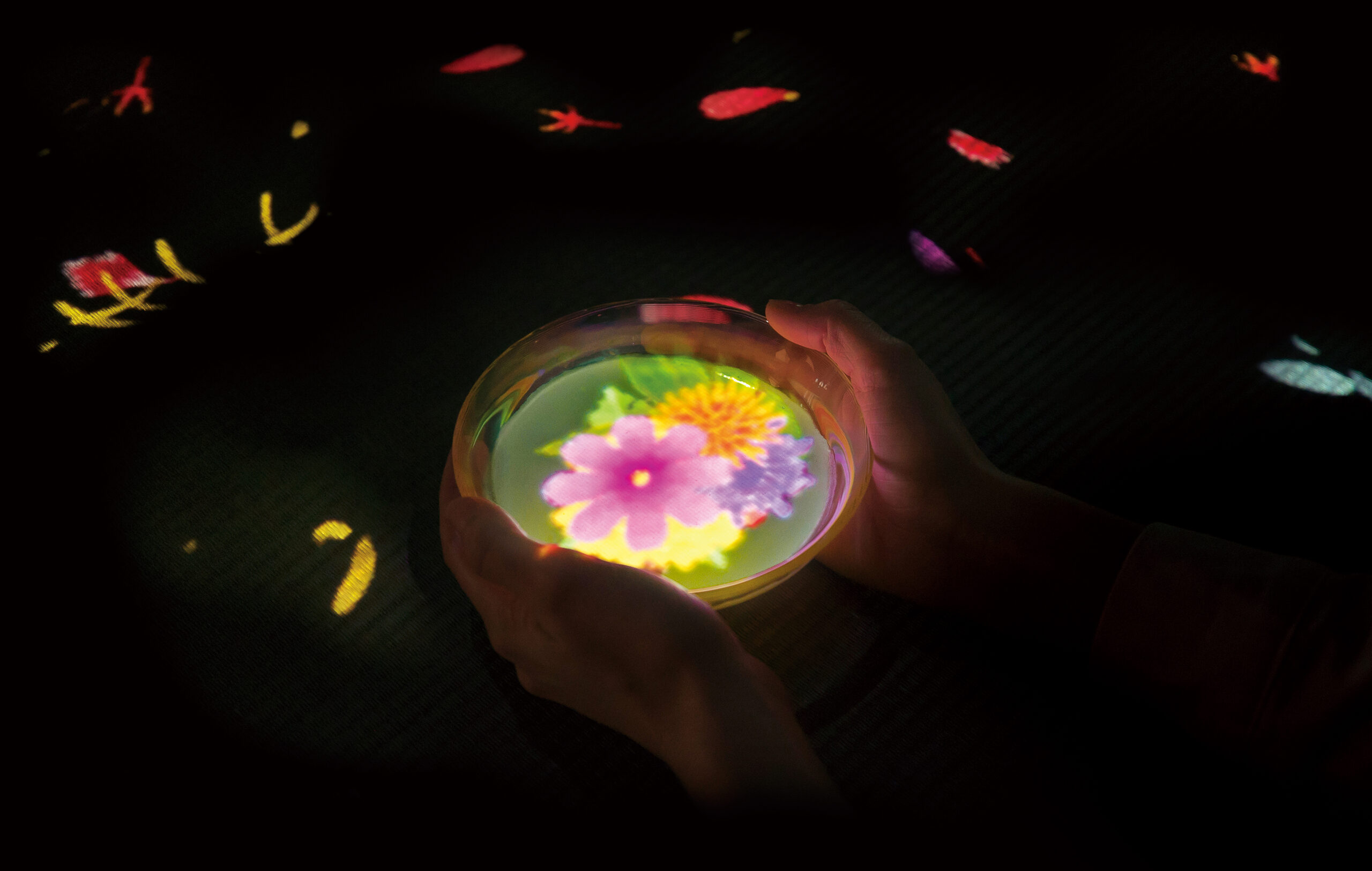
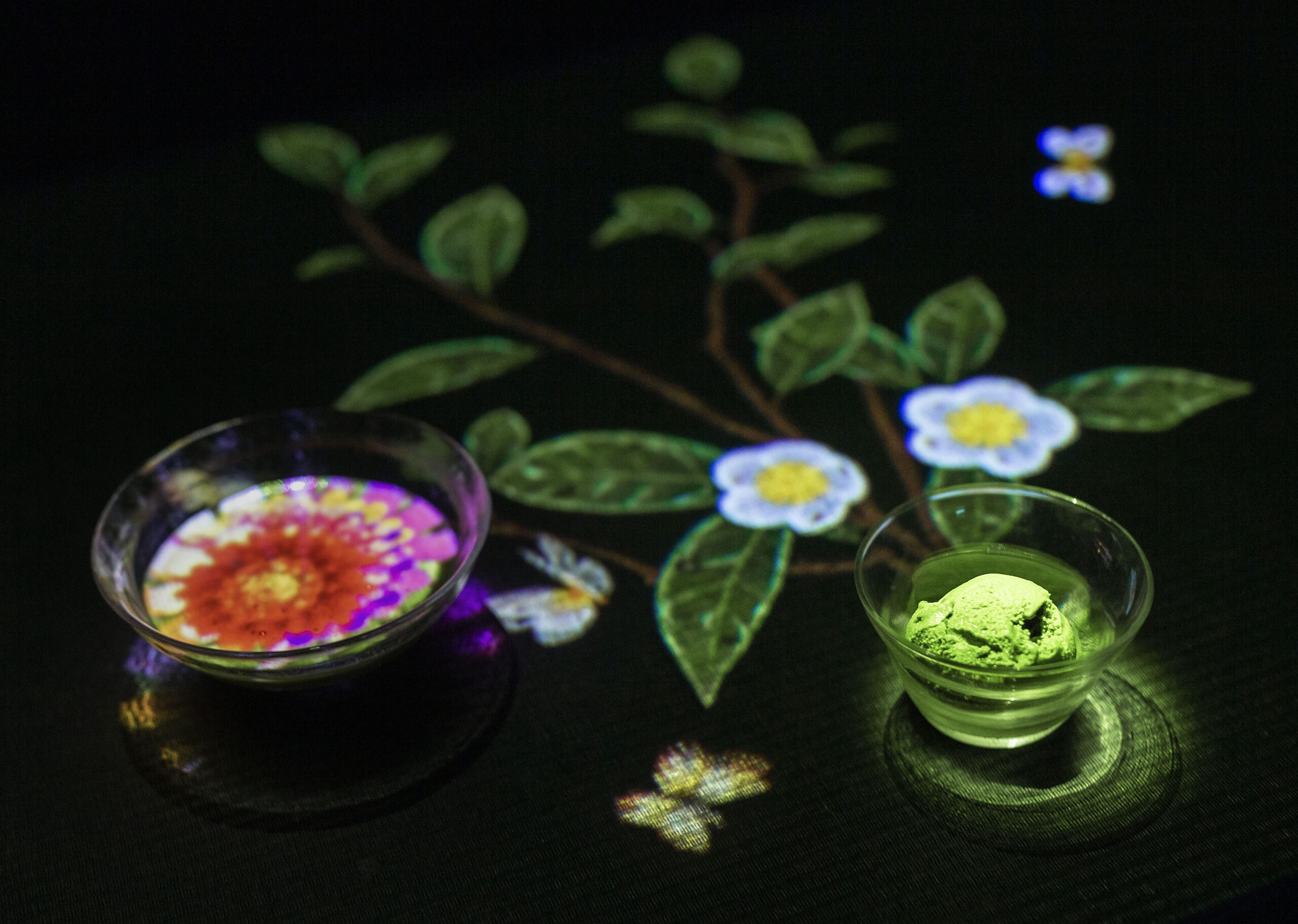
The tea house “EN TEA HOUSE Genka-tei” in the venue is a tea-themed work space where you can enjoy the infinite world of tea and frozen Tamaryokucha (ice cream of Tamaryokucha) with seasonal flowers. is. Spring flowers such as rape blossoms in March and cherry blossoms in April will appear. The flowers will continue to bloom indefinitely as long as there is tea. In addition, white butterflies stop in the work “Tea Tree” where tea trees grow from frozen tamaryokucha.
Furthermore, from the end of March, a new menu will be available, which is a non-caffeine Rojo barley tea latte with a gentle sweetness and fragrance. Rojo Barley Tea Latte is a special cup of domestic Rojo barley tea and low-fat milk with Wasanbon from Kagawa.
Before modern times, in Japan, “Kasane no Irome” was a combination of front and back colors (silk was thin at that time, so the lining was transparent, so it became a complicated color), gradation of overlapping colors, and weaving. Complex colors, such as the combination of warp and weft, were named after the seasonal colors.
“Kasane no Irome”, which consists of a combination of front and back colors, is applied when the lamp is shining strongly and when the shine is weak, and it is one color of cherry blossoms, which is the spring “Kasane no Irome”. The lamp will shine.
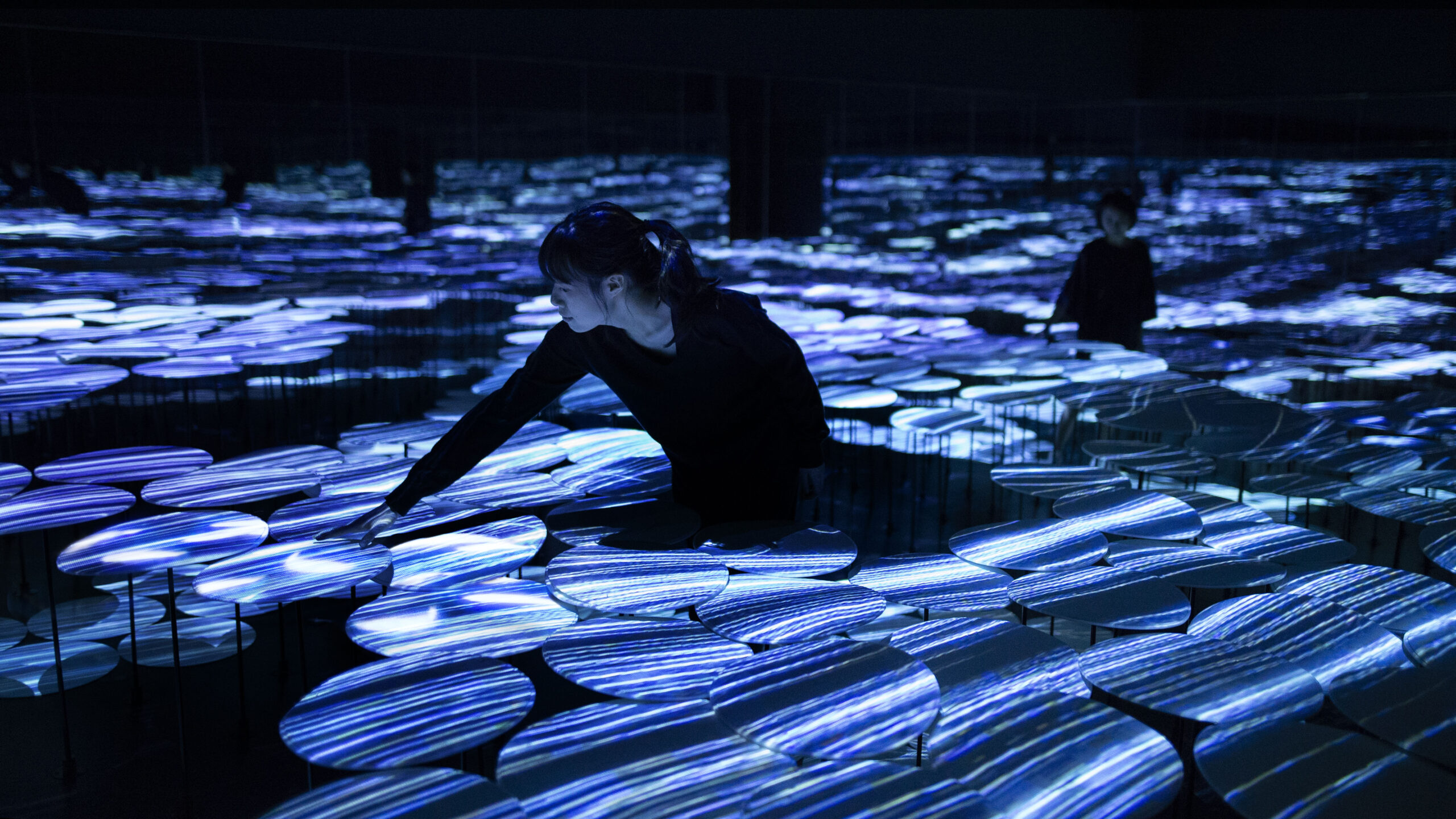
When a person stops near a lamp and stays still, the closest lamp shines strongly and timbres, and the light propagates to the two closest lamps. The propagated light propagates to the nearest lamp and continues while reverberating in the same way. The propagating light always makes all the lamps shine only once and always returns to the first lamp. The light of a lamp that responds to a person is divided into two, each of which becomes a single line of light that passes through all the lamps only once, and finally meets at the first lamp that is the starting point.
The seemingly disjointed lamps should be a single connected line (with the same start and end points) that can be drawn with a single stroke when a line is drawn from each lamp to the lamp that is the closest in three dimensions. Is located in. By arranging the lamps in this way, the light of the lamp that responds to the person always passes through all the lamps like a single stroke, and always once, even though it propagates to the nearest lamp. Only pass, and finally, it returns to the first ramp that was the starting point.
Regarding the arrangement of the lamps, the arrangement of the lamps in space is mathematically obtained, the variation in the distribution in the height direction of the lamps and the smoothness of the three-dimensional path (light trajectory) are quantified, and many solutions are obtained. We evaluated it.
The arrangement of the lamps created by such a process seems to be random at first glance, but in reality, it feels natural because the light continues to the closest physical object. And since the trajectory of the light of the lamp is connected by a single line, the light born from oneself and the light born from another person always intersect.
This is not a static beauty that presupposes that the space is fixed, but a dynamic beauty that is created when people approach this lamp, and a beauty of continuity. It seems to be a space of a new era that accepts the changes and movements of the space due to the existence of people.
The lampshade is made of Murano glass (Venetian glass).
Forest of Resonating Lamps-One Stroke, Spring Noyama
teamLab, 2019, Interactive Installation, Murano Glass, LED, Endless, Sound: Hideaki Takahashi
In the same flow of time as in the real world, the blooming flowers change throughout the year. Flowers grow while repeating birth and death. If it grows too much, it will scatter and die all at once.
Also, when people touch the flowers, the flowers scatter and die.
And it influences other works, and it also scatters due to the influence of other works. For example, when portraits of “Walk, Walk, Walk” walk in, they bloom more easily than usual, and the places where flowers bloom obscure the world of other works.
The work continues to be drawn in real time by a computer program. The pre-recorded video is not being played. As a whole, the previous state is not duplicated and continues to change forever, influenced by people’s behavior. The picture at this moment can never be seen again.
Memory of topography
teamLab, 2018, Interactive Digital Installation, Sound: Hideaki Takahashi
It depicts a eternal view of a satoyama in a space with a height difference that can be divided.
The world of work changes with the passage of time in reality. Rice, which is still small and lush in spring, will grow large in summer and turn golden in autumn. And with the passage of time in reality, insects and flowers also change. Insects move under the influence of people’s behavior. Then, as people move around, the flow of air changes, and the flow of air changes the movement of rice and scattered petals.
This work changes from moment to moment throughout the year, but it hardly changes every year and continues forever. However, just as the natural scenery is the same and never the same, the same time in the next year of the work seems to be the same scenery, not exactly the same picture. In other words, this moment can never be seen again. The scenery, which is almost the same but not the same, continues forever every year.
The work and the canvas that mediates it are separated, the canvas is transformed, and the visual illusion of continuous dynamic behavior immerses the whole body in the work, and people are at the boundary between the body and the world. Will also be lost. Then, as one common world changes due to the existence of oneself and others, oneself and others blend into the same world.
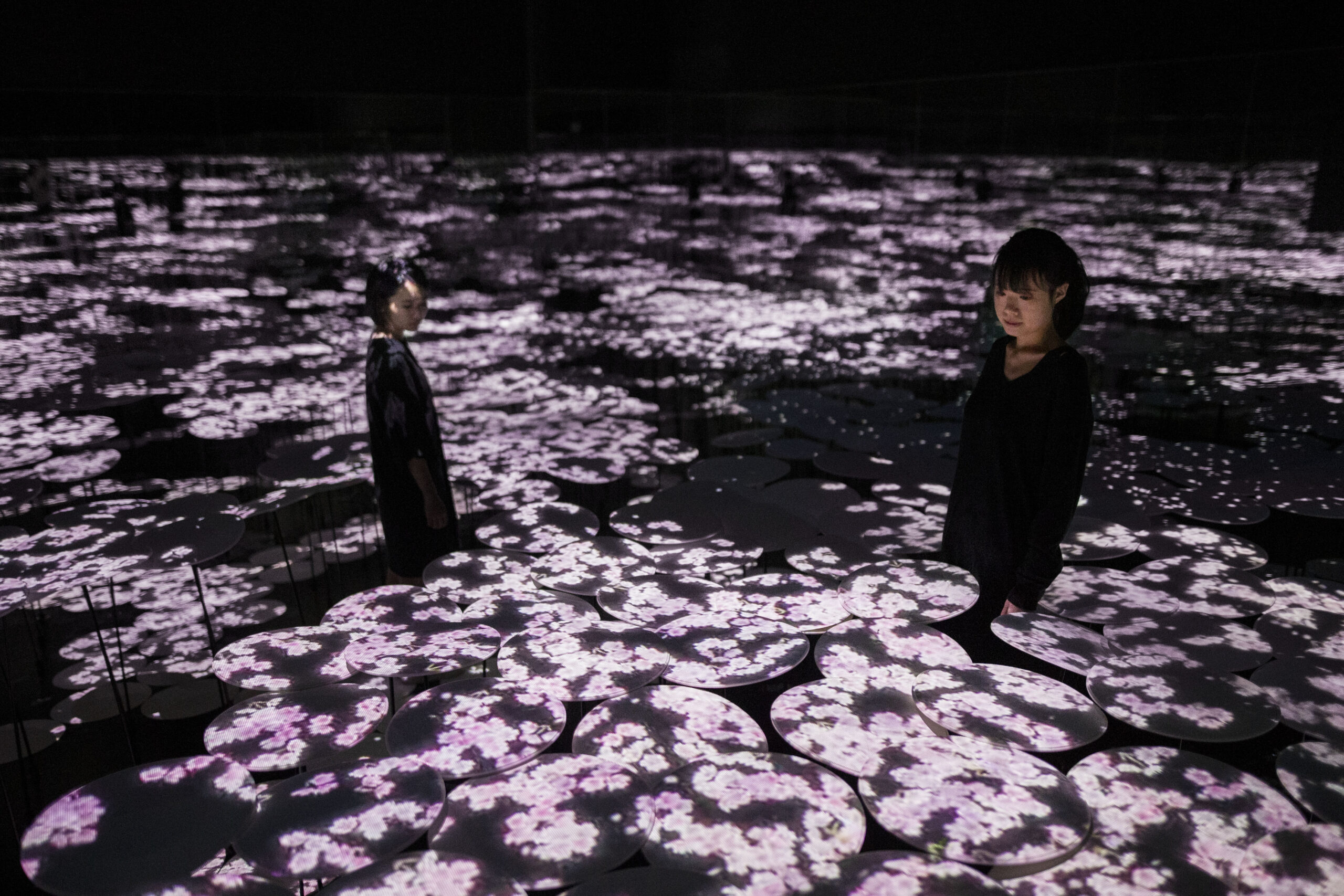
Flowers blooming in the stacked space
teamLab, 2018, Digital Installation, Endless, Sound: Hideaki Takahashi
As for the flowers, the flowers that bloom throughout the year change. However, when the lotus blooms in the passage outside this space, the lotus also blooms in this space.
Flowers are born, grow, bud, bloom, then disperse, wither, and die. In other words, flowers continue to be born and die forever.
With the same positional relationship as the many screens placed in the space, many viewpoints are placed in the work world of the three-dimensional space on the computer, flattened by the “super-subjective space”, and each is at the same position as the viewpoint. The plane is placed on the screen. Since the “super-subjective space” cuts out the space around the viewpoint, the space of the work world is superimposed on the exhibition space.
When a visitor sees through the screen another person who overlaps with the flowers and is buried in the flowers, that person is also relatively buried in the flowers at that position in the work world. For a visitor, it is equivalent to the person’s existence in the work world. In other words, when viewed through the screen by others, the visitor becomes a complete part of the work, not only in the exhibition space but also in the world of the work.
The work continues to be drawn in real time by a computer program. The pre-recorded video is not being played. Overall, the previous state continues to transform without being duplicated. The picture at this moment can never be seen again.
Flowers blooming in the infinite universe in small things
teamLab, 2016, Interactive Digital Installation, Endless, Sound: Hideaki Takahashi
When you make a cup of tea, flowers are born and bloom in the tea. When you pick up the vessel, the flowers scatter and spread out of the vessel. The flowers bloom indefinitely as long as there is tea. The tea in the bowl becomes an infinite world where flowers continue to bloom. Drink the infinite world as it is.
A work is born only when tea exists. After drinking the tea, the work no longer exists.
Since tea is a transformative entity, its size changes depending on the amount of tea in the bowl. The size of the flowers that are born will change according to the size. If the tea spills from the bowl, the spilled tea will bloom again.
As for the flowers, the seasonal flowers of each month bloom throughout the year.
The work continues to be drawn in real time by a computer program. The pre-recorded video is not being played. As a whole, the previous state is not duplicated and continues to change forever, influenced by people’s behavior. The picture at this moment can never be seen again.
茶の木
teamLab, 2018, Interactive Digital Installation, Endless, Sound: Hideaki Takahashi
When frozen tea is placed, tea trees grow from it. When a lot of frozen tea is placed, it eventually becomes a tea garden. Tea trees bloom in late autumn. When the frozen tea is moved, the tea tree withers and grows again in a new location.
When the frozen tea runs out, the tea tree will die.
The work continues to be drawn in real time by a computer program. The pre-recorded video is not being played. As a whole, the previous state is not duplicated and continues to transform under the influence of the viewer’s behavior. The picture at this moment can never be seen again.
Overview
MORI Building DIGITAL ART MUSEUM: EPSON teamLab Borderless >Official homepage
Location:
1-3-8 Aomi, Koto-ku, Tokyo (Odaiba Palette Town)
Price:
Adults (high school students and above) 3,200 yen, disability discount 1,600 yen, children (junior high school students and below) 1,000 yen
* Free for children under 3 years old
* The discount for people with disabilities is applicable to the person who has a disability certificate and one companion.
* Opening hours and closed days vary depending on the season. Please check the website for details.